June 15th, 2026
With the CLI version of TangleGuard, agents get the complete picture of your codebase within milliseconds - using TangleGuard’s fast and deterministic code scanners. With the new skill, agents are now able to use TangleGuard CLI whenever structural decisions need to be made.
Using this skill, the quality of the conversion with LLMs rise significantly. You’ll notice that the LLM get more knowledge. You find the skill here: https://github.com/TangleGuard/Agent-Skill/blob/main/SKILL.md. You need to have the TangleGuard CLI installed, best via Homebrew: https://tangleguard.com/apps/cli
The skill is written, so the agents uses TangleGuard whenever it adds a new dependencies or wants to understand the big picture of the codebase. It also checks for circles and dependency rule violations. The skill is a living document and will be improved over time. If you have suggestion to make it even better, let me know!
Your agents should not ever scan the whole codebase. It’s a waste of tokens and very time consuming. More information here: https://tangleguard.com/apps/claude-code-skill
May 26th, 2026

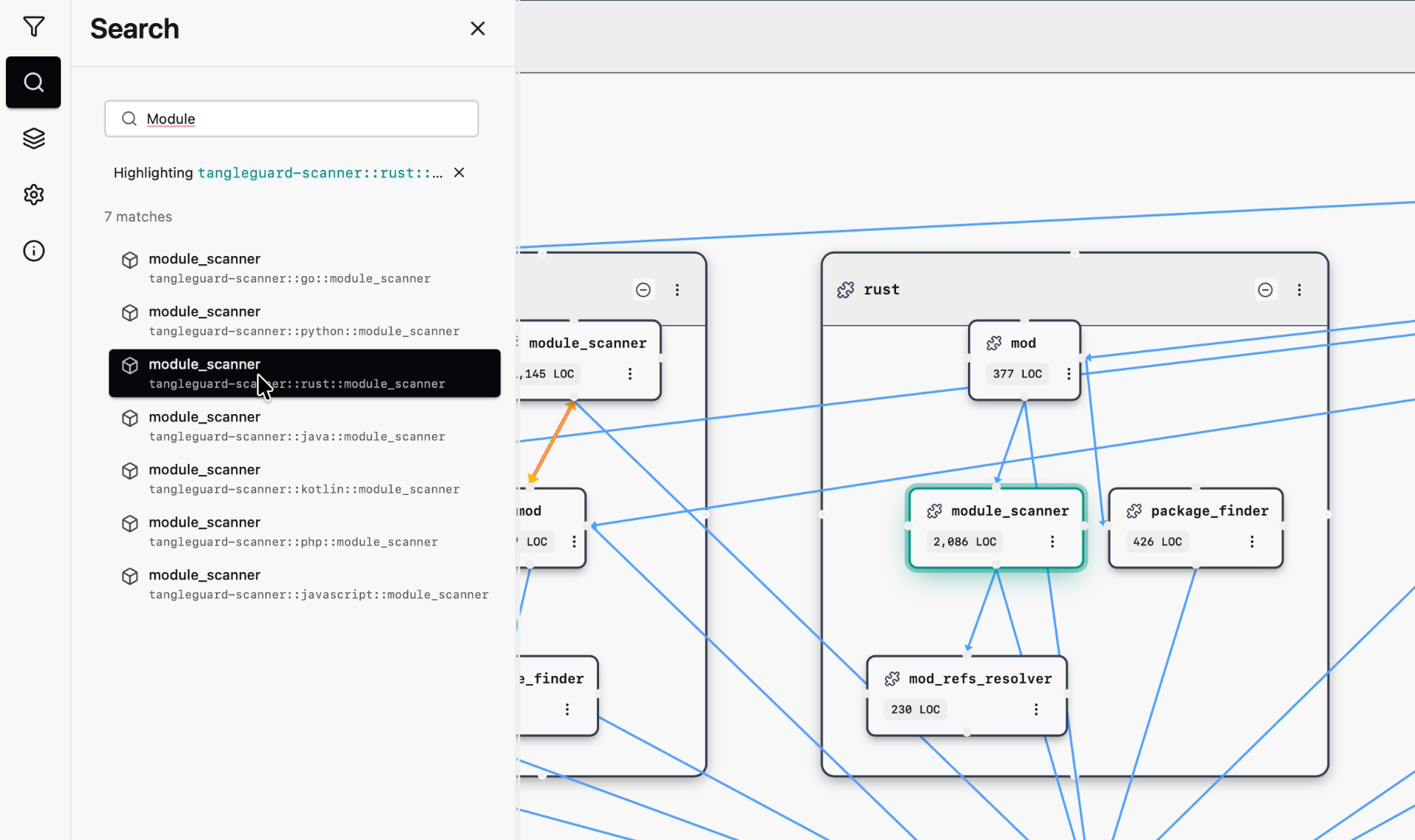
You now can search for nodes aka. components within your graph.
To use it, open the new Search panel from the left menu, and type the name of the component you’d like to see. The UI will point you to the node when clicking on an item in the result list.
May 19th, 2026
New

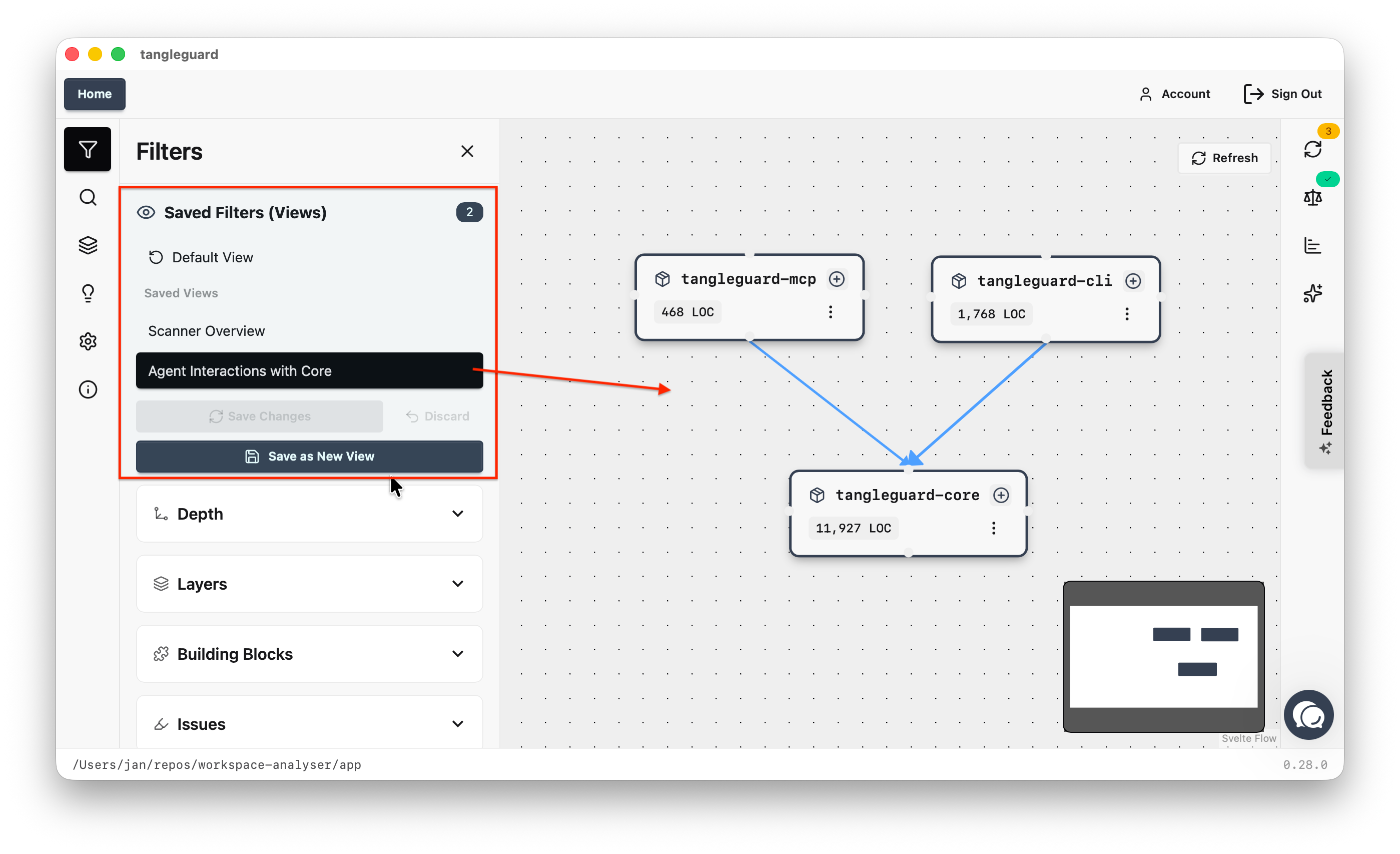
The dependency graph can get quite big and sometimes overwhelming. As you know you have a couple of filter options, to only see the building blocks of your codebase that matter to you at that moment.
Now you have the ability to store the filter settings, so you can get that specific view of your codebase quickly again later. The views are stores in the config file in your project. With this, the whole team is able to use the same views.
February 16th, 2026
New

After a big rewrite the dependency rule system is now back again. It' now works with the new workspace abstraction and can be used 🎉
You can define layers (which are groups of components within your codebase) and then define how they are allowed to depend on each other. With this you can enforce layered architectures, clean architecture or hexagonal architecture.
You can find more information and how-to’s here https://tangleguard.com/docs/features/governance